Learn across missions.
Preserve useful experience beyond a single aircraft or deployment.
The CAC software program brings incident intelligence, mission planning and proprietary swarm development into a broader vision for fire response—across residential, municipal and wildland settings. Built to help people see more, plan with context and explore coordinated aerial capability.
Bring public fire information and mission context into an interface that supports operator review.
Develop the software that could help observation aircraft and future response assets contribute to a common mission.
Explore agency workflows and evaluation needs with the teams who would use the capability.
A central focus of our software program: proprietary technology intended to help observation aircraft and future response assets work together under operator oversight.
Swarm coordination is being developed and evaluated in local simulation alongside the CAC operations application. Our goal is to make coordinated aerial capability useful to incident-response teams.
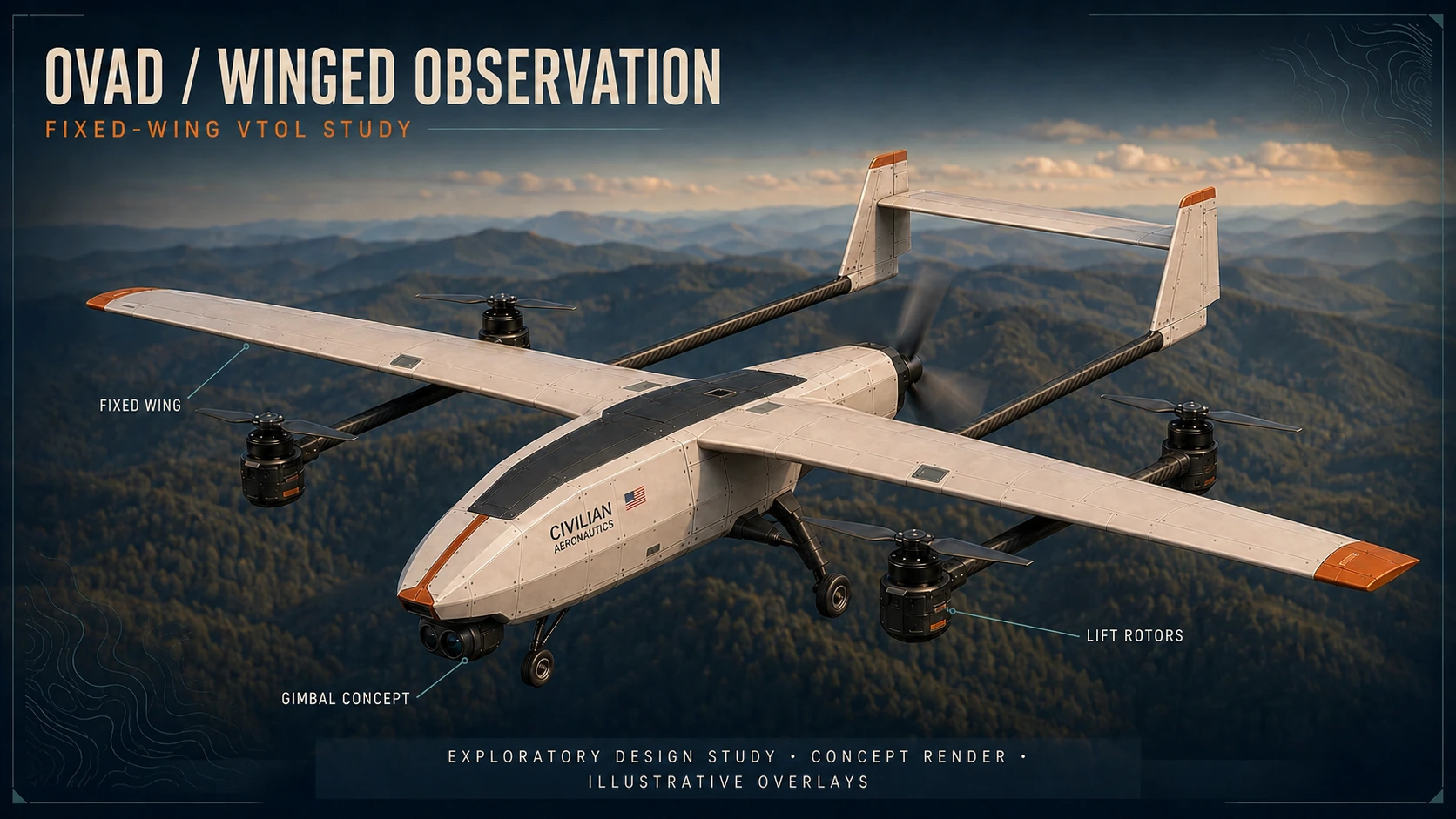 PRE-PRODUCTION CONCEPT · ILLUSTRATIVE OVERLAYS
Our ambition extends beyond managing individual aircraft. Swarm coordination is a central development priority for making multiple aerial assets useful together, with people overseeing the mission.
This public overview describes the intended role and development status of the capability. Detailed technical material is not part of this briefing.
Civilian Aeronautics is developing a collective-learning architecture intended to turn mission experience into lasting knowledge. The goal is to help future aircraft and operators draw on reviewed lessons from earlier missions—supporting better-informed observation, planning and coordination over time.
Knowledge must be tested, remain traceable to its evidence, and stay subject to human oversight.
 MISSION / 01
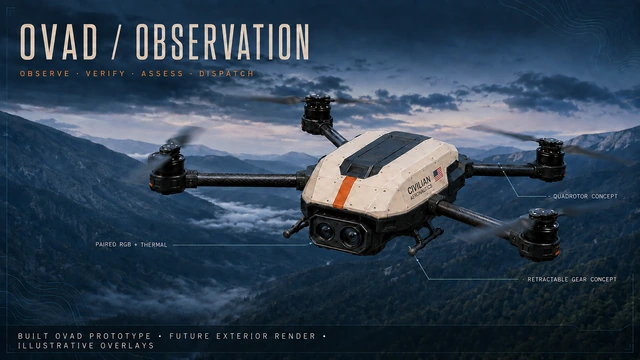 MISSION / 02
 FUTURE MISSIONS
Fire response is a central application of our work. We also see potential Department of Defense (DoD) applications for the collective-learning architecture and swarm software, including shared situational awareness, inspection and coordinated mission support. These are prospective development directions, subject to application-specific evaluation and validation.
Preserve useful experience beyond a single aircraft or deployment.
Evaluate potential lessons before relying on them.
Learning supports decisions within established operational limits.
The development application brings public incident data and fire-weather screening into a common interface for operator review.
Source freshness depends on satellite observations, agency updates and application synchronization. A refresh does not guarantee a new observation. Screening scores are development tools, not validated fire predictions. NASA FIRMS data guidance →
Mapping, waypoint planning and fleet-status tools form the foundation of the CAC operations application.
The operations interface brings maps, aircraft status and mission context together. Explore the visual direction through this simulated interface demonstration.
This demo illustrates the operations interface. It is not a demonstration of the proprietary swarm implementation or live aircraft control.
A dated view of the program. Software implementation, simulation evidence and aircraft performance are distinct stages.
Incident-feed ingestion, mapping, threat-screening and mission-planning components, with MAVLink integration code and an explicit simulation mode.
The current development build has a recorded 442-test software-suite pass. A human-operator exercise is under review.
Further software evaluation and integration with the operations application remain ahead.
Aircraft integration, hardware compatibility and operational performance require subsequent testing. No deployment dates or flight-performance claims are established here.
Civilian Aeronautics develops its own mission software and is pursuing an integrated aircraft-and-coordination approach to fire response. This briefing presents our public development focus and status.
Agency teams, technical partners and prospective collaborators — talk with us about software evaluation and future pilot programs.